Report binding support note
Machine Care and Punch Cleanup
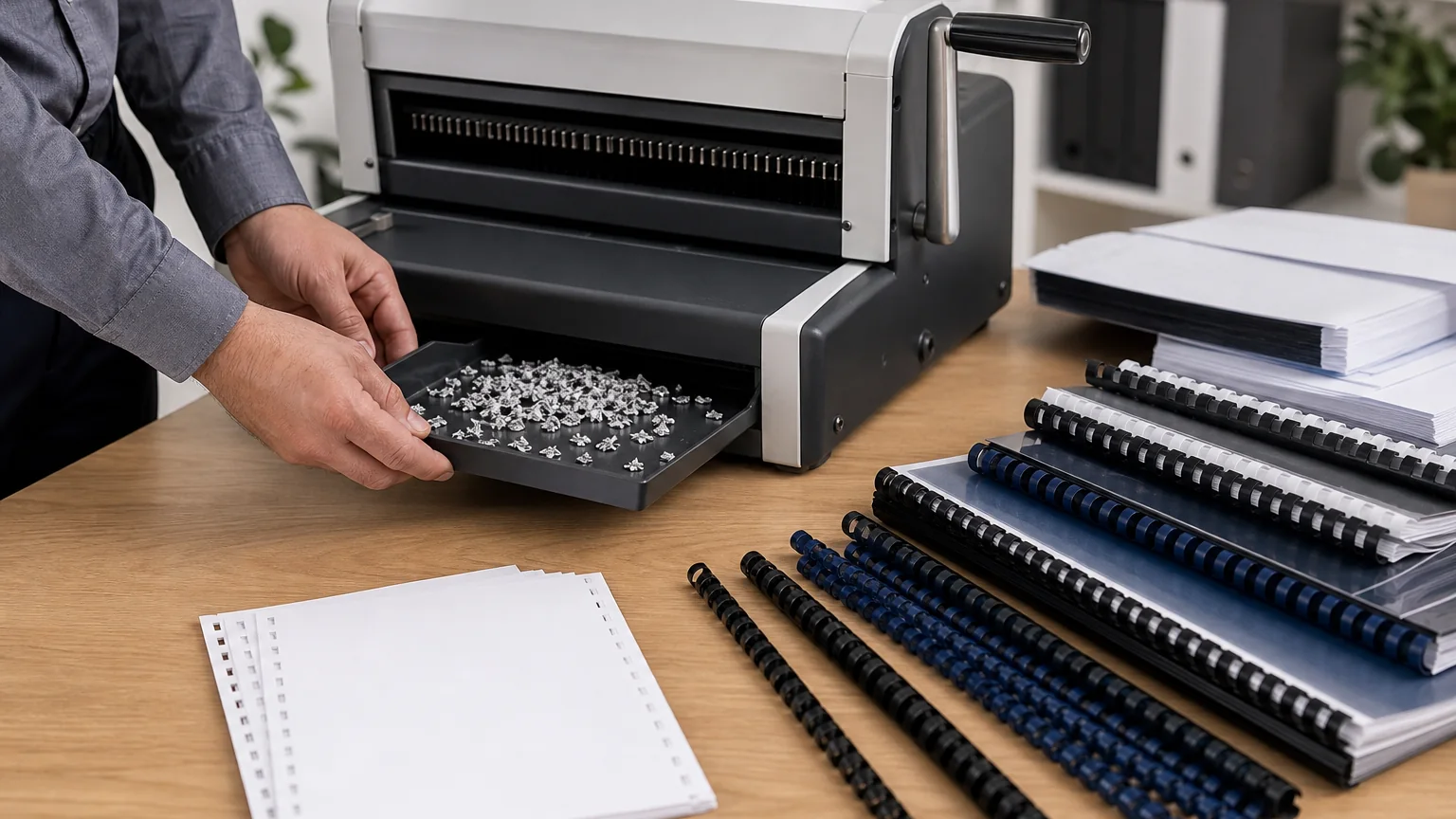
This supporting guide focuses on emptying chips, testing scrap pages, and keeping the binding machine reliable.
What to check first
Comb binding is popular because it makes office reports feel organized without requiring a print shop for every revision. A bound proposal, training manual, policy draft, or monthly report can be opened flat, updated with replacement pages, and handed across a table with more polish than a stapled packet. The right machine should match the documents your team actually produces.
For machine care and punch cleanup, the useful test is whether the machine helps a real office finish reports without drama. The setup should make page order, cover choice, punching rhythm, comb size, and final review easier to repeat when several documents are due at once.
A good report-finishing station also gives people permission to slow down at the right moments: square the stack, test the punch on scrap paper, check the spine size, and review the cover order before binding the final copy. Those small pauses prevent the mistakes that make a professional report feel improvised.
Capacity is the first practical limit. Some machines are comfortable for short internal reports, while others can handle thicker manuals and repeated batches. The stated capacity is useful, but the real question is how many sheets you can punch cleanly without forcing the handle, misaligning pages, or slowing the person doing the work.
For machine care and punch cleanup, the useful test is whether the machine helps a real office finish reports without drama. The setup should make page order, cover choice, punching rhythm, comb size, and final review easier to repeat when several documents are due at once.
A good report-finishing station also gives people permission to slow down at the right moments: square the stack, test the punch on scrap paper, check the spine size, and review the cover order before binding the final copy. Those small pauses prevent the mistakes that make a professional report feel improvised.
Punch quality changes the finished impression. Uneven holes, ragged edges, and bad margins make a report look rushed even when the content is strong. Good guides, predictable paper stops, and a simple test page before a final batch can prevent many small mistakes.
For machine care and punch cleanup, the useful test is whether the machine helps a real office finish reports without drama. The setup should make page order, cover choice, punching rhythm, comb size, and final review easier to repeat when several documents are due at once.
A good report-finishing station also gives people permission to slow down at the right moments: square the stack, test the punch on scrap paper, check the spine size, and review the cover order before binding the final copy. Those small pauses prevent the mistakes that make a professional report feel improvised.
Comb size matters more than many offices expect. A comb that is too small pinches pages and makes them hard to turn. A comb that is too large looks loose and bulky. Keeping a small range of common comb sizes near the machine helps teams bind reports quickly without guessing.
For machine care and punch cleanup, the useful test is whether the machine helps a real office finish reports without drama. The setup should make page order, cover choice, punching rhythm, comb size, and final review easier to repeat when several documents are due at once.
A good report-finishing station also gives people permission to slow down at the right moments: square the stack, test the punch on scrap paper, check the spine size, and review the cover order before binding the final copy. Those small pauses prevent the mistakes that make a professional report feel improvised.
Workflow planning keeps binding days calm. Covers, back sheets, tabs, draft copies, replacement pages, and final review versions should be staged before punching begins. Most errors happen when people rush between printing, collating, punching, and binding without a clear table layout.
For machine care and punch cleanup, the useful test is whether the machine helps a real office finish reports without drama. The setup should make page order, cover choice, punching rhythm, comb size, and final review easier to repeat when several documents are due at once.
A good report-finishing station also gives people permission to slow down at the right moments: square the stack, test the punch on scrap paper, check the spine size, and review the cover order before binding the final copy. Those small pauses prevent the mistakes that make a professional report feel improvised.
Maintenance is simple but important. Paper chips build up, blades need clean use, and scrap tests catch alignment problems before expensive covers are wasted. A comb binding machine lasts longer when the office treats it as a small production station rather than a closet gadget.
For machine care and punch cleanup, the useful test is whether the machine helps a real office finish reports without drama. The setup should make page order, cover choice, punching rhythm, comb size, and final review easier to repeat when several documents are due at once.
A good report-finishing station also gives people permission to slow down at the right moments: square the stack, test the punch on scrap paper, check the spine size, and review the cover order before binding the final copy. Those small pauses prevent the mistakes that make a professional report feel improvised.
Workflow planning notes
Comb binding is popular because it makes office reports feel organized without requiring a print shop for every revision. A bound proposal, training manual, policy draft, or monthly report can be opened flat, updated with replacement pages, and handed across a table with more polish than a stapled packet. The right machine should match the documents your team actually produces.
For comb binding machine care and punch cleanup, the useful test is whether the machine helps a real office finish reports without drama. The setup should make page order, cover choice, punching rhythm, comb size, and final review easier to repeat when several documents are due at once.
A good report-finishing station also gives people permission to slow down at the right moments: square the stack, test the punch on scrap paper, check the spine size, and review the cover order before binding the final copy. Those small pauses prevent the mistakes that make a professional report feel improvised.
Capacity is the first practical limit. Some machines are comfortable for short internal reports, while others can handle thicker manuals and repeated batches. The stated capacity is useful, but the real question is how many sheets you can punch cleanly without forcing the handle, misaligning pages, or slowing the person doing the work.
For comb binding machine care and punch cleanup, the useful test is whether the machine helps a real office finish reports without drama. The setup should make page order, cover choice, punching rhythm, comb size, and final review easier to repeat when several documents are due at once.
A good report-finishing station also gives people permission to slow down at the right moments: square the stack, test the punch on scrap paper, check the spine size, and review the cover order before binding the final copy. Those small pauses prevent the mistakes that make a professional report feel improvised.
Punch quality changes the finished impression. Uneven holes, ragged edges, and bad margins make a report look rushed even when the content is strong. Good guides, predictable paper stops, and a simple test page before a final batch can prevent many small mistakes.
For comb binding machine care and punch cleanup, the useful test is whether the machine helps a real office finish reports without drama. The setup should make page order, cover choice, punching rhythm, comb size, and final review easier to repeat when several documents are due at once.
A good report-finishing station also gives people permission to slow down at the right moments: square the stack, test the punch on scrap paper, check the spine size, and review the cover order before binding the final copy. Those small pauses prevent the mistakes that make a professional report feel improvised.
Comb size matters more than many offices expect. A comb that is too small pinches pages and makes them hard to turn. A comb that is too large looks loose and bulky. Keeping a small range of common comb sizes near the machine helps teams bind reports quickly without guessing.
For comb binding machine care and punch cleanup, the useful test is whether the machine helps a real office finish reports without drama. The setup should make page order, cover choice, punching rhythm, comb size, and final review easier to repeat when several documents are due at once.
A good report-finishing station also gives people permission to slow down at the right moments: square the stack, test the punch on scrap paper, check the spine size, and review the cover order before binding the final copy. Those small pauses prevent the mistakes that make a professional report feel improvised.
Workflow planning keeps binding days calm. Covers, back sheets, tabs, draft copies, replacement pages, and final review versions should be staged before punching begins. Most errors happen when people rush between printing, collating, punching, and binding without a clear table layout.
For comb binding machine care and punch cleanup, the useful test is whether the machine helps a real office finish reports without drama. The setup should make page order, cover choice, punching rhythm, comb size, and final review easier to repeat when several documents are due at once.
A good report-finishing station also gives people permission to slow down at the right moments: square the stack, test the punch on scrap paper, check the spine size, and review the cover order before binding the final copy. Those small pauses prevent the mistakes that make a professional report feel improvised.
Maintenance is simple but important. Paper chips build up, blades need clean use, and scrap tests catch alignment problems before expensive covers are wasted. A comb binding machine lasts longer when the office treats it as a small production station rather than a closet gadget.
For comb binding machine care and punch cleanup, the useful test is whether the machine helps a real office finish reports without drama. The setup should make page order, cover choice, punching rhythm, comb size, and final review easier to repeat when several documents are due at once.
A good report-finishing station also gives people permission to slow down at the right moments: square the stack, test the punch on scrap paper, check the spine size, and review the cover order before binding the final copy. Those small pauses prevent the mistakes that make a professional report feel improvised.
Return path
After this detail is clear, return to the main comb binding guide and compare machines with your page counts, cover choices, and deadline rhythm in mind.
Keep a small sample packet near the machine with paper weight, cover stock, comb size, and a successful margin setting. That makes the next report run faster and more consistent.